
Seeing ice on your air conditioner during a 95-degree Oklahoma summer feels…well, completely backwards.
Your house is hot. The AC’s running nonstop. Then you notice the system struggling to cool, airflow gets weaker, and there’s literal ice forming on the refrigerant lines or inside the unit.
You might assume a frozen AC means the system is “working extra hard.” Unfortunately, freezing usually means something is wrong.
When an air conditioner freezes up, airflow and temperature balance inside the system break down. Left alone long enough, that ice buildup can damage major components and eventually shut the system down completely. If your AC is covered in ice or cooling poorly, here’s what may be causing it.
A Dirty Air Filter AC Problem Can Trigger Freezing Fast
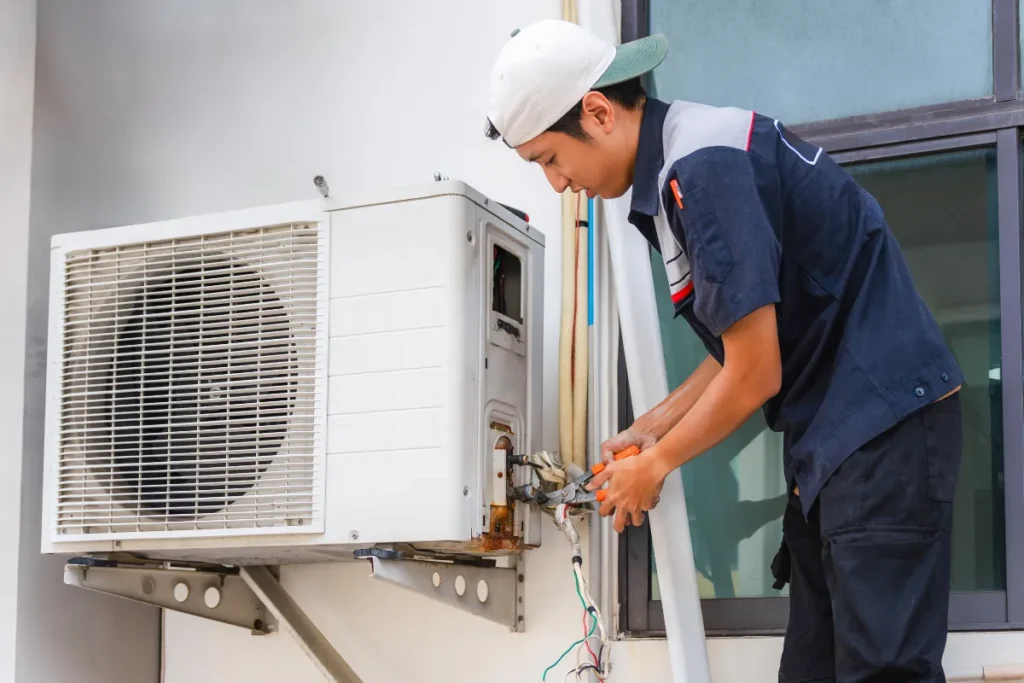
This is one of the most common causes of frozen evaporator coils in Oklahoma homes. Your air conditioner needs steady airflow moving across the evaporator coil inside the system, and that airflow helps regulate temperature and prevents condensation from freezing.
Once the air filter becomes clogged with dust, pet hair, pollen, and debris, airflow drops dramatically. Then the evaporator coil gets too cold, and moisture starts freezing directly onto the coil surface.
At first, the ice may only form in small patches. Then it spreads. Meanwhile, you’ll start noticing symptoms like:
- Weak airflow from vents
- Rooms cooling unevenly
- Longer cooling cycles
- Rising electric bills
- Warm air despite the system constantly running
Oklahoma dust and pollen make this issue even more common here. During heavy allergy seasons, filters can clog much faster than people expect. And while a dirty filter seems minor, restricted airflow can create major strain on the entire system.
Low Refrigerant Signs Often Show Up Before Freezing Happens
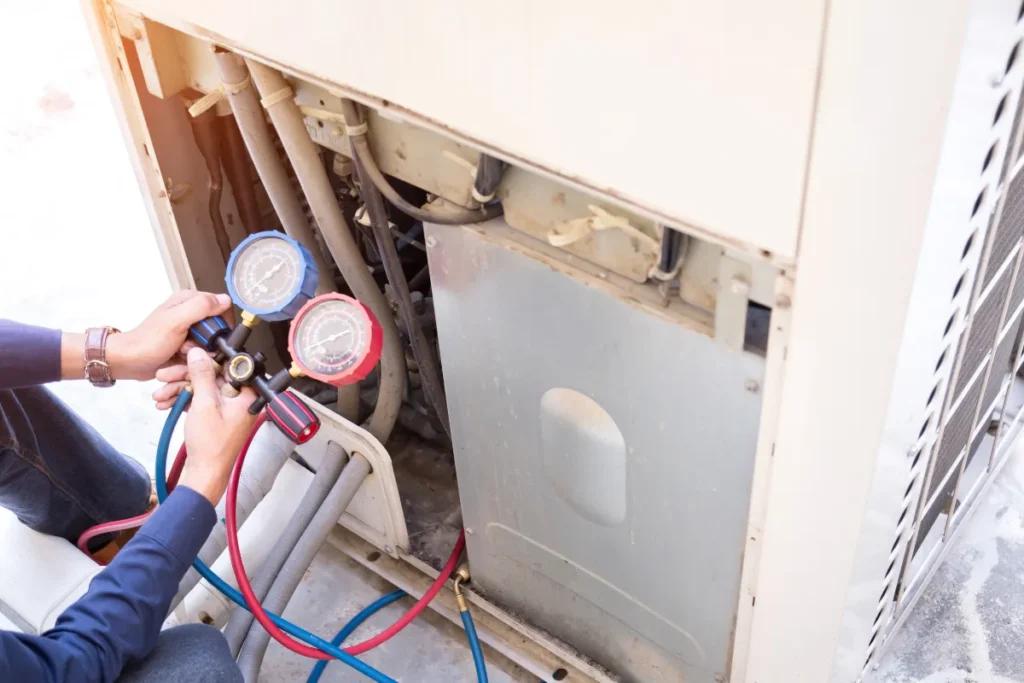
Your AC relies on refrigerant pressure to absorb and move heat properly. When refrigerant levels drop due to a leak, the pressure inside the system changes. That causes the evaporator coil temperature to drop too low, eventually leading to ice buildup.
This problem usually develops gradually. Often, you’ll first notice the house taking longer to cool during the hottest part of the day. Then, eventually, the system struggles constantly, even when it’s running nonstop.
Some of the most common low refrigerant signs include:
- Hissing noises near the unit
- Bubbling sounds
- Warm air from vents
- Frozen refrigerant lines
- Higher humidity indoors
- Ice buildup around the indoor coil
A refrigerant leak isn’t something to ignore or “top off” casually. Refrigerant operates in a sealed system. If levels are low, there’s usually a leak somewhere that needs professional repair.
Frozen Evaporator Coils Can Completely Block Cooling
The evaporator coil is responsible for absorbing heat from inside your home. Once ice starts covering that coil, airflow gets blocked more and more. Eventually, cold air can barely move through the system at all.
That’s why frozen systems often create a strange combination of symptoms. The AC runs constantly, but the house keeps getting warmer.
Some people will even shut the thermostat lower and lower, trying to force the system to cool better. Unfortunately, that often makes freezing even worse because the unit keeps running longer without fixing the underlying issue. In severe cases, the entire indoor coil compartment can turn into a solid block of ice.
Running the AC Constantly During Oklahoma Heat Adds Stress
Oklahoma summers are brutal on HVAC systems. When temperatures stay in the upper 90s or push past 100 degrees for days straight, air conditioners run for long stretches with very little downtime. Older systems especially struggle during heat waves.
That extra demand exposes airflow problems fast. A partially clogged filter, weak blower motor, dirty evaporator coil, or low refrigerant level may not create noticeable problems during mild spring weather. Then July arrives, and suddenly the system freezes solid during the first major heat stretch. That’s why many freeze-up calls happen during the hottest weeks of the year.
Closed Vents and Blocked Airflow Can Contribute Too
A surprising number of people accidentally create airflow problems themselves. Closing too many vents around the house changes pressure inside the HVAC system. The same thing happens when furniture blocks vents or return air pathways.
Air conditioners are designed to move a very specific amount of air. Once airflow gets restricted, temperatures inside the system drop too low, and condensation begins freezing.
This issue becomes even more common in homes with heavily clogged ducts, dirty blower fans, collapsed ductwork, restrictive air filters, or undersized return vents. The AC may still technically “run,” but it won’t operate efficiently or safely for long.
What You Should Do if Your AC Is Covered in Ice
If you see visible ice on the refrigerant lines, outdoor unit, or indoor coil, turn the system off and switch the fan setting to “ON.” That helps thaw the ice faster and prevents additional strain on the compressor.
Often, homeowners keep trying to run the AC while it’s frozen because the house feels hot. Unfortunately, continuing to operate the system can cause expensive compressor damage if airflow stays blocked.
You should also check the air filter immediately. If it’s dirty, replace it before restarting the system. However, if the unit freezes again shortly afterward, there’s likely a larger issue that needs professional diagnosis.
When to Call for AC Repair OKC Homeowners Can Trust
An occasional airflow issue may have a simple solution, but repeated freezing usually means something deeper is happening inside the system.
If your AC keeps freezing up, struggles to cool the house, produces weak airflow, or shows signs of refrigerant problems, it’s smart to schedule service before the issue worsens. Ignoring freeze-ups can eventually damage the compressor, increase energy bills, shorten system lifespan, and leave you without air conditioning during the hottest part of summer.
Metro Heat & Air, professional AC repair OKC homeowners can rely on, is here to help you identify whether the issue involves low refrigerant, dirty coils, airflow restrictions, blower motor problems, or failing components inside the HVAC system.
We can diagnose frozen evaporator coils, AC systems covered in ice, airflow issues, and cooling failures before they turn into major breakdowns. When your air conditioner starts freezing up, getting the problem checked early can save you from much larger repairs later in the summer.
Give us a call today!