

Your air conditioner has one job during an Oklahoma summer: keep your house comfortable no matter what the thermometer says outside.
So when it’s running around the clock, and your living room still feels like late afternoon on a football field, something isn’t right. One possibility is a refrigerant leak.
Unlike clogged air filters or a tripped breaker, refrigerant problems don’t usually announce themselves with a dramatic breakdown. Instead, they creep up slowly. Your AC loses a little cooling power, your energy bills inch upward, and before long, you’re wondering why your system never seems to catch up.
Let’s talk about the warning signs so you can catch a refrigerant leak early, long before it causes expensive damage to your air conditioner.
First Things First: Refrigerant Doesn’t Get “Used Up”

One of the biggest misconceptions homeowners have is that refrigerant works like gasoline in a car. It doesn’t.
Your AC operates as a sealed system. Refrigerant continuously circulates through the evaporator coil, compressor, and condenser, absorbing heat from inside your home and releasing it outdoors. Under normal conditions, the refrigerant level should stay exactly the same for years.
If it’s low, there’s only one explanation: it’s leaking.
But simply adding more refrigerant without repairing the leak is like putting air into a tire with a nail stuck in it. It’ll work for a while, but the problem hasn’t gone anywhere.
Your House Isn’t Cooling Like It Used To
This is usually the first clue. Maybe you set the thermostat to 72 degrees, but the temperature never gets below 77. Or perhaps the bedrooms cool off eventually, but it takes hours longer than normal. You might even notice your AC starts running in the morning and barely shuts off until sunset.
That’s because low refrigerant reduces your system’s ability to absorb heat from inside your home. The air blowing from the vents may still feel cool, just not cold enough to lower the indoor temperature efficiently.
Many homeowners assume they simply need a bigger air conditioner. Often, the issue is much smaller than that.
Your Electric Bill Suddenly Climbs
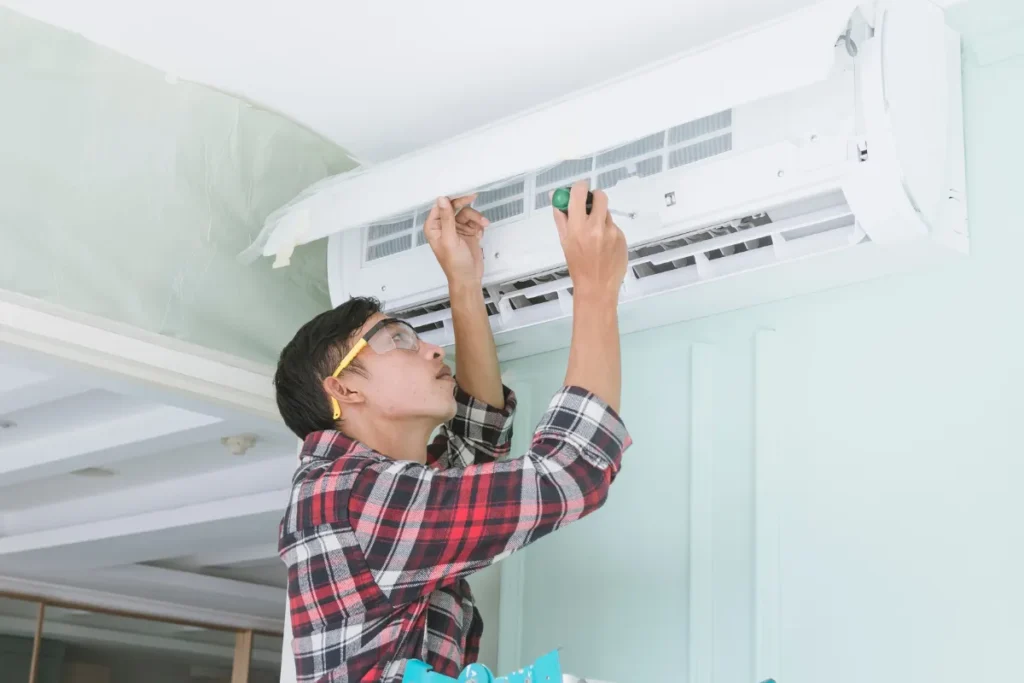
When refrigerant levels drop, your air conditioner has to work much harder to reach the temperature you’ve selected.
Instead of cooling your home in several short cycles throughout the day, it may run almost continuously. Think about driving uphill with your foot pressed all the way to the floor. Your engine burns more fuel because it’s working harder.
Your AC behaves the same way. If your utility bill jumps significantly compared to previous summers, especially without any major lifestyle changes, a refrigerant leak could be part of the problem.
Ice Starts Forming on the Refrigerant Lines
This one surprises a lot of homeowners. If your AC is struggling because it’s low on refrigerant, you might expect everything to get warmer.
Instead, you find ice. That’s because low refrigerant reduces pressure inside the evaporator coil, causing the coil’s temperature to drop below freezing. Moisture in the air freezes onto the coil, and eventually ice spreads onto the refrigerant lines outside your indoor unit.
You may notice:
- Ice covering the copper refrigerant line
- Frost around the indoor evaporator coil
- Water pooling near the furnace after the ice melts
- Cooling that gets worse throughout the day
Many people simply shut the system off until the ice melts, restart it, and assume they’ve fixed the issue. Unfortunately, the ice is a symptom, not the problem.
You Hear Hissing or Bubbling Sounds
Air conditioners aren’t completely silent, but they shouldn’t sound like someone slowly letting air out of a balloon.
A small refrigerant leak often creates a faint hissing noise as pressurized refrigerant escapes through a tiny crack. Larger leaks may produce bubbling or gurgling sounds as refrigerant and air move through the damaged section of tubing.
These noises are often easiest to hear near the indoor evaporator coil or around the outdoor condenser unit after the system shuts off.
Your Home Feels Humid

Your air conditioner does more than cool the air. It removes humidity, too.
As warm indoor air passes across the evaporator coil, moisture condenses and drains away. That’s one reason your house feels more comfortable after the AC has been running for a while.
When refrigerant levels fall, the coil can’t absorb heat effectively. That also reduces its ability to remove moisture. You might notice:
- The air feels sticky.
- Your home feels warmer than the thermostat says.
- Sheets and towels never seem completely dry.
- Windows begin collecting condensation.
Many homeowners blame Oklahoma humidity alone, when their air conditioner has quietly lost much of its dehumidifying ability.
The Compressor Is Working Overtime
Your compressor is the heart of your air conditioning system.It’s also one of the most expensive components to replace.
When refrigerant levels drop too low, the compressor has to work much harder to maintain pressure throughout the system. Running under those conditions day after day creates excessive heat and strain.
Ignore a refrigerant leak long enough, and what could’ve been a relatively straightforward repair may turn into a compressor replacement costing several thousand dollars. That’s why technicians recommend addressing refrigerant issues as soon as symptoms appear.
Can You Fix a Refrigerant Leak Yourself?
Unfortunately, no. Finding a refrigerant leak requires specialized tools that detect pressure changes or trace escaping refrigerant. Once the leak is located, the damaged section must be repaired before the system can be evacuated, tested, and recharged with the correct amount of refrigerant.
Adding refrigerant without repairing the leak simply postpones the problem. Handling refrigerants also requires EPA certification, making this a repair that’s best left to licensed HVAC professionals.
Don’t Ignore the Warning Signs
A refrigerant leak rarely fixes itself. The longer your system runs with low refrigerant, the harder every major component has to work. That means higher electric bills, poorer cooling, unnecessary wear on your compressor, and a much greater chance of a complete system breakdown during the hottest week of the summer.
If your AC isn’t keeping up, you’ve noticed ice on the refrigerant lines, your energy bills are climbing, or your system just doesn’t seem to cool like it used to, don’t wait for it to quit altogether.
The experienced technicians at Metro Heat & Air OKC can quickly diagnose a refrigerant leak, repair the source of the problem, and restore your air conditioner to peak performance. Whether you’re in Oklahoma City, Moore, Mustang, Yukon, Edmond, Norman, or the surrounding area, we’re here to help you stay comfortable all summer long.
Contact Metro Heat & Air OKC today to schedule your AC inspection before a small refrigerant leak turns into a much bigger repair.