
Your freezer is keeping everything frozen solid, but the milk in your refrigerator is getting warm, the vegetables are wilting, and you’re starting to worry about how much food you’ll have to throw away.
It’s a frustrating problem, especially when half the appliance seems to be working perfectly fine.
If your freezer is cold but your fridge is warm, there’s a good chance something is interfering with the cooling system or preventing cold air from reaching the refrigerator compartment. The good news is that you may not need a new appliance.
Here’s what could be causing the problem, what you can check yourself, and when it’s time to call for refrigerator repair.
How Can the Freezer Work While the Refrigerator Doesn’t?
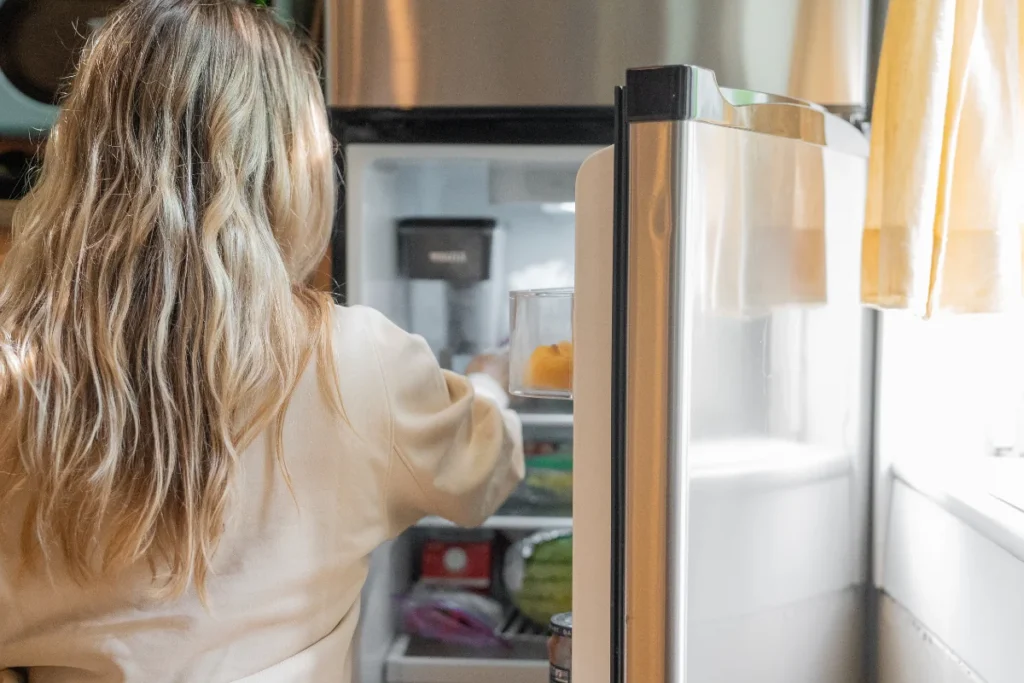
Many refrigerator-freezer combinations use a shared cooling system. The evaporator removes heat from the air, and fans circulate that cooled air throughout the appliance.
In single-evaporator models, cold air travels from the freezer into the refrigerator through vents and ducts. If something interrupts that airflow, your freezer can remain cold while the refrigerator gradually warms up.
Other models use separate cooling systems for each compartment, so the cause depends partly on your refrigerator’s design.
5 Common Causes of a Warm Refrigerator and Cold Freezer
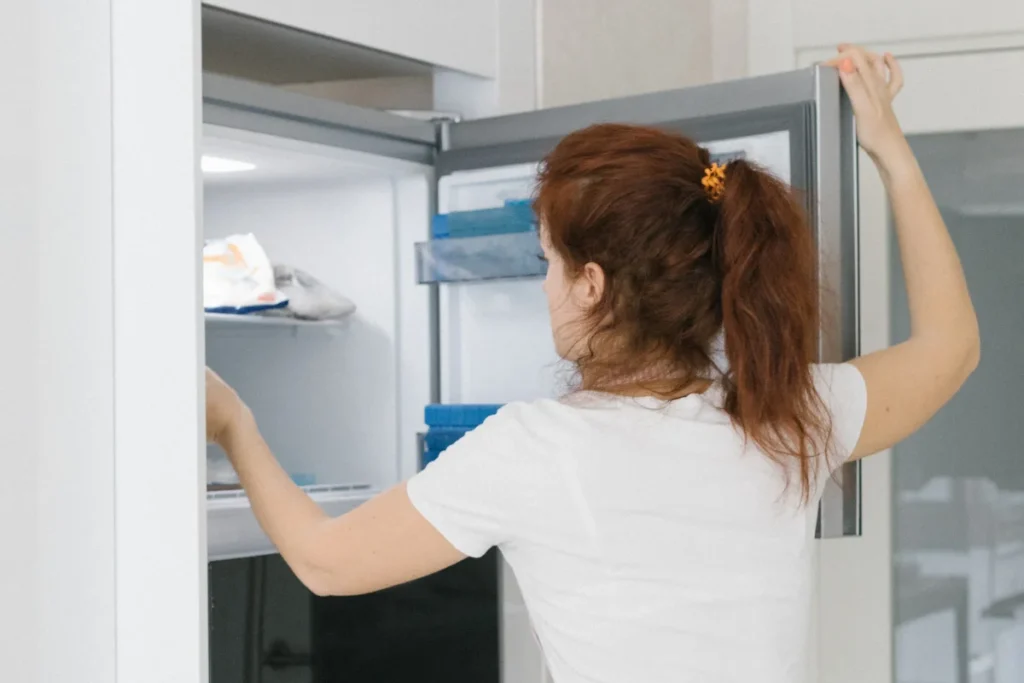
With the different design options in mind, here are a few possible reasons why your freezer is cold but your fridge is warm:
1. Blocked Air Vents Are Restricting Circulation
Sometimes, the problem is as simple as an overcrowded refrigerator. Food containers, grocery bags, and leftovers can block the vents that distribute cold air throughout the appliance. In models that circulate air between the freezer and refrigerator, overpacking either compartment can interfere with cooling.
As GE Appliances explains, proper airflow is essential for maintaining consistent temperatures in both compartments. Fortunately, this is an easy place to start troubleshooting. Check for blocked vents and rearrange items to give cold air room to circulate. If your refrigerator still isn’t cooling after you’ve cleared the vents, the problem may involve a fan or another internal component.
2. The Evaporator Fan Isn’t Working
In many refrigerators, an evaporator fan helps distribute cold air from the freezer throughout the appliance. When that fan stops working, the freezer may stay cold while the refrigerator temperature rises.
You might notice that the refrigerator feels unusually quiet, that airflow from the vents is weak, or that the problem develops gradually over several days. Depending on your model, the fan may stop running when you open the freezer door, so silence alone doesn’t confirm a failure.
A technician can test the fan motor, wiring, and related controls to determine whether a replacement is necessary.
3. Frost Buildup Is Blocking the Cooling System
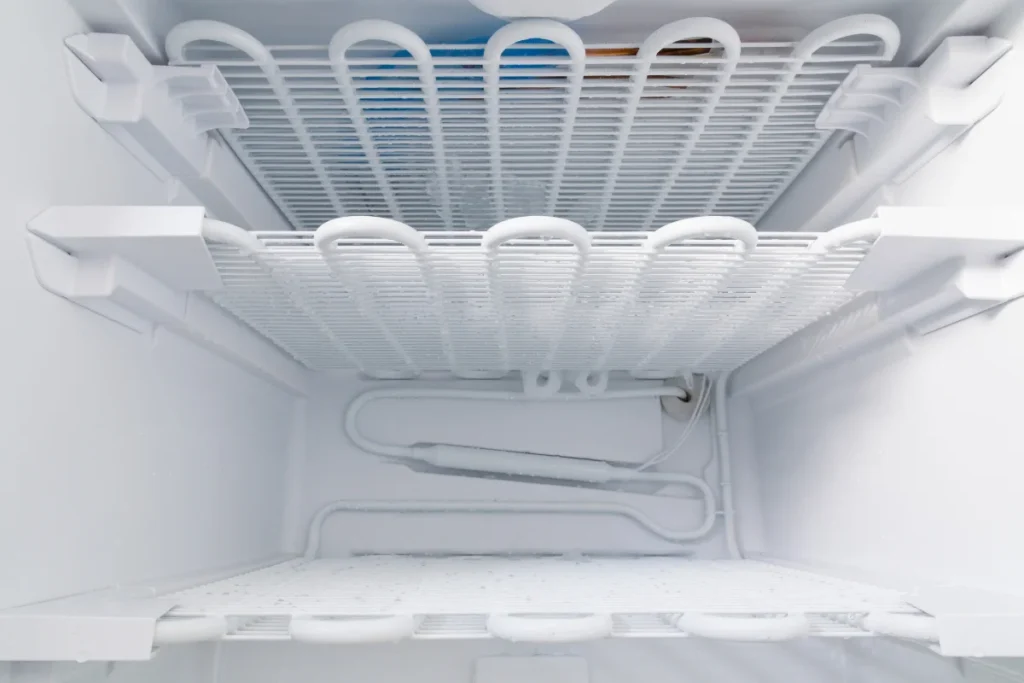
A thick layer of frost inside your freezer isn’t just an inconvenience. It may indicate that the automatic defrost system isn’t working correctly. Modern frost-free refrigerators periodically melt ice that accumulates on the evaporator coils.
If a defrost heater, temperature sensor, or control component fails, ice can build up around those coils and restrict airflow. Eventually, the refrigerator compartment may stop receiving enough cold air even though the freezer still appears to be working.
Heavy frost along the freezer’s back panel can be a warning sign. Avoid scraping away ice with sharp objects or attempting to access electrical components yourself. A technician can identify the failed defrost component and correct the underlying problem.
4. The Air Damper Is Stuck Closed
Some refrigerators have an air damper that regulates how much cold air enters the fresh-food compartment. Think of it as a small door that opens and closes to control airflow.
When the damper becomes stuck closed or its motor fails, cold air may remain trapped in the freezer. Your freezer continues doing its job, but the refrigerator becomes warmer because it isn’t receiving enough cooled air. You might notice uneven temperatures or very little airflow near the refrigerator’s vents.
Damper problems often require professional diagnosis because the symptoms can resemble fan or temperature-control failures.
5. A Faulty Temperature Sensor Is Sending Incorrect Readings
Your refrigerator relies on sensors to determine when cooling is needed and how the system should operate. If a sensor begins reporting incorrect temperatures, the control board may fail to activate certain cooling functions or regulate airflow correctly.
For example, the refrigerator might think it’s already cold enough even though the actual temperature is well above the selected setting.
Start by checking your temperature controls and making sure they haven’t been accidentally adjusted. If the settings are correct but the refrigerator remains warm, a technician can test the sensors and controls before recommending repairs.
What Should You Do With Food in a Warm Refrigerator?
When your refrigerator stops cooling properly, protecting your food should be your immediate priority. According to the U.S. Food and Drug Administration, refrigerators should maintain temperatures of 40°F or below, while freezers should remain at 0°F.
Use an appliance thermometer to check the actual temperature rather than relying on how the food feels. If your refrigerator is above 40°F, move perishables to another working refrigerator or an adequately iced cooler as soon as possible.
Discard perishable foods that have been above 40°F for more than two hours. If you can’t determine how long they’ve been too warm, it’s safest to throw them away. Don’t assume food is safe simply because it looks or smells normal.
When Should You Call for Refrigerator Repair?
Rearranging food, checking the temperature settings, and clearing blocked vents may resolve minor cooling problems.
But if your refrigerator stays warm while the freezer continues working, you could have a failed fan, blocked evaporator, defective damper, or malfunctioning sensor.
These components can produce similar symptoms, making professional diagnosis more reliable than guessing which part needs replacement. And the longer your refrigerator struggles to maintain a safe temperature, the greater your risk of spoiled groceries and additional appliance problems.
Get Fast Refrigerator Repair in Edmond, OK
You shouldn’t have to throw away hundreds of dollars in groceries or replace an entire refrigerator because one component has stopped working.
At Edmond Appliance Repair, we diagnose and repair refrigerator cooling problems for homeowners throughout Edmond, Oklahoma City, and surrounding areas.
Whether your refrigerator has a faulty evaporator fan, defrost system failure, or another cooling problem, our experienced technicians can identify the cause and recommend the appropriate repair.
We offer 24/7 quick-response service and free appliance estimates with repair, helping you address refrigerator problems before they become even more expensive.
Don’t let a warm refrigerator put your groceries and your budget at risk. Contact Edmond Appliance Repair or call (405) 531-0055 today to schedule refrigerator repair and get your appliance cooling properly again.